The Southern Bread Riots happened in cities across the South from March to April of 1863 but for this, we’re just going to concentrate on the one here. Richmond is what it’s all about anyways so… here we go!
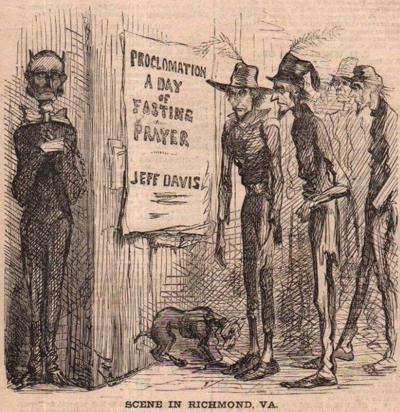
Just before the Chancellorsville Campaign, on April 2nd, 1863, the women of Richmond reached their breaking point. The prices and scarcity of bread had left their families on the brink of starvation. The population of the city had more than doubled, from 38,000 to 100,000 as people sought refuge, but the city couldn’t feed them. With the rural farms being overrun by troops; pilfering crops and killing livestock to feed themselves. The output to the cities had become scarce and Richmond was at the end of the line. Richmond had been hit continuously with bad luck since the fall of 1862. A smallpox pandemic from November 1862 to February 1863 decimated the poorer parts of the overly crowded city. An incredibly hard winter damaged the lower-class neighborhoods’ water pipes, forcing people to draw water from the river or the well in Capitol Square. An explosion on Browns Island on March 13th injured 69 people, most of whom were impoverished women and teenagers working while the men were at war. Couple all of that with the fact that the Union had blockades at every port and a March snowstorm dropped more than a foot of snow a week before the riot, the city wasn’t receiving food either way. The cherry on top occurred on March 27th though, Jefferson Davis called for a day of fasting and prayer… in the middle of a FAMINE. The few dealers who had access to flour and meal knew that there wouldn’t be more available for months and decided to raise prices of all bread products higher than they had been since the war started. Many couldn’t afford the prices and grew discontent, as well as fucking hungry. Who would have thought?!
On the evening of April 1st, 1863, Mary Jackson, a peddler and mother of a soldier, and Minerva Meredith drew a crowd in Oregon Hill at Belvidere Hill Baptist Church and called for the disenfranchised of the city to meet the next morning. They would march on Gov. John Letcher’s office, sheer numbers alone would persuade him to handle the issue, and if he refused, they had the strength to demand it.
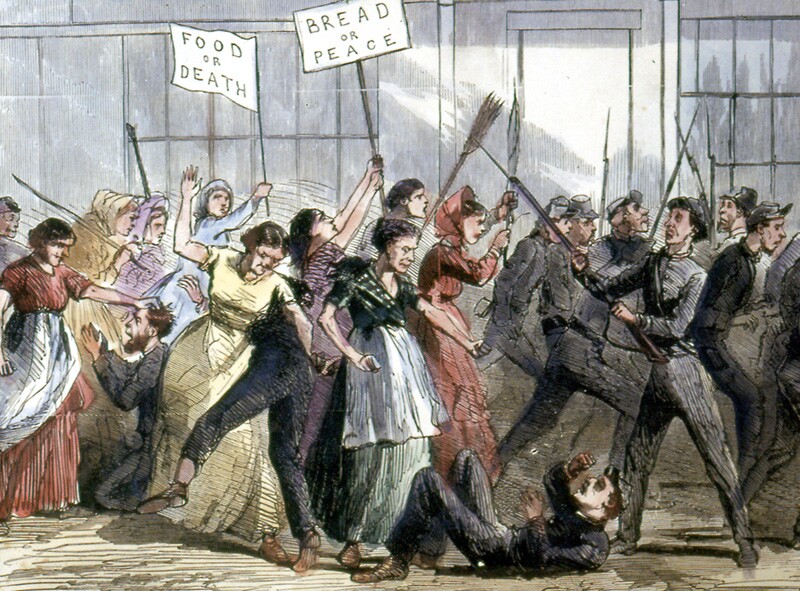
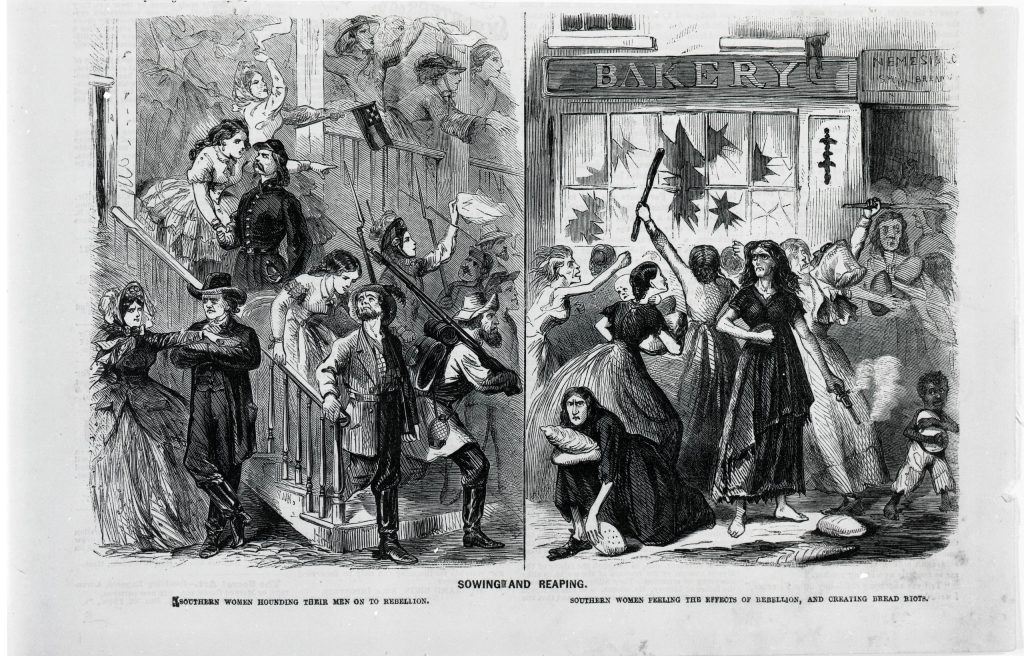
The morning of April 2nd garnered a crowd of over 100 women and young boys armed with axes, knives, brooms, and whatever else they could garner. The march then began down 9th St. in front of the Executive Mansion. After a less-than-stellar bumbling of excuses by Letcher to try and quell the situation, the women were done. They began marching again, hundreds joining their ranks as they yelled their chants of “Bread! Bread!” and “Bread or Blood!” down Main St., then on to Cary Street. I’ve seen estimates from as little as 1,000 to possibly even 5,000 and they entered the stores of grain merchants with little opposition, in their eyes the government had abused them long enough and they did what they had to. Described by Verina Davis as “tall, daring, Amazonian looking” and seen wearing a large white feather sticking up from the brim of her hat, Minerva could be seen directing those descending on the shops. Stores all down Main and Cary Streets were ransacked, from clothiers to jewelers, no merchant was safe.
Authorities quickly realized that the needs of the city’s people, which they had ignored, had reached a pinnacle. The Mayor of Richmond, Joseph Mayo, read the crowd the Riot Act but it fell on deaf ears. Confederate President Jefferson Davis showed up to the scene and in a paltry attempt to disperse the riot tossed the coins out of his pocket and asked them to go home. Sorry Jeffy, it will take a bit more than the change in your pocket to feed starving people. When that didn’t work, he pulled out his pocket watch and announced that they would have 5 minutes to leave or the Confederate militia that had shown up for support would open fire on the crowd. The crowd slowly began to disperse when it was announced that they only had one minute left. 60 rioters were arrested along with the leaders. Mary Jackson received 5 years in the Virginia State Penitentiary and Minerva received a $100 fine and a 6-month sentence.
Despite the arrests, this was a victory for Richmond’s women and the impoverished. The government made sure to disperse more rations to the lower classes by releasing some of the Confederate reserves and prices began to drop. City Leaders attempted to keep the riot out of the papers, but it was too late, Union POWs in Richmond leaked the news and by April 8th it was on the front page of the New York Times. By April 11th even Confederate deserters who had crossed lines told the tales of the women trying to feed their families and how the soldiers were demoralized by the entire situation. This was the end of riots in Richmond, at least during the Civil War.

 Nightmares of The Month